Framer website template designed for culinary businesses
Introduction
Overview
The web development industry is expanding, particularly in the culinary sector, where numerous restaurants and coffee shops are seeking an online presence. Developing an individual website can be expensive and requires prior technical knowledge.
Objective
Streamline website development by offering a pre-designed template on the Framer platform tailored for the culinary industry.
Outcome
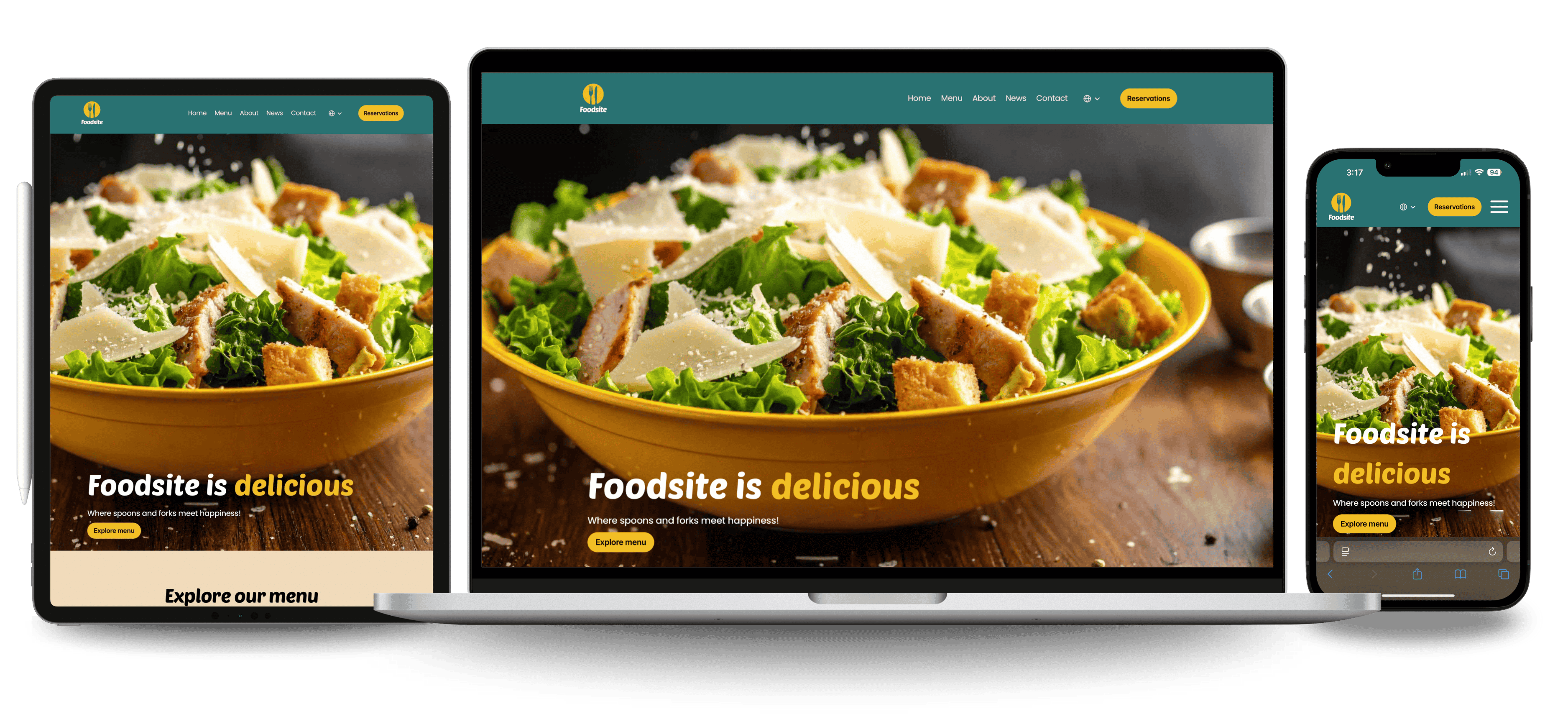
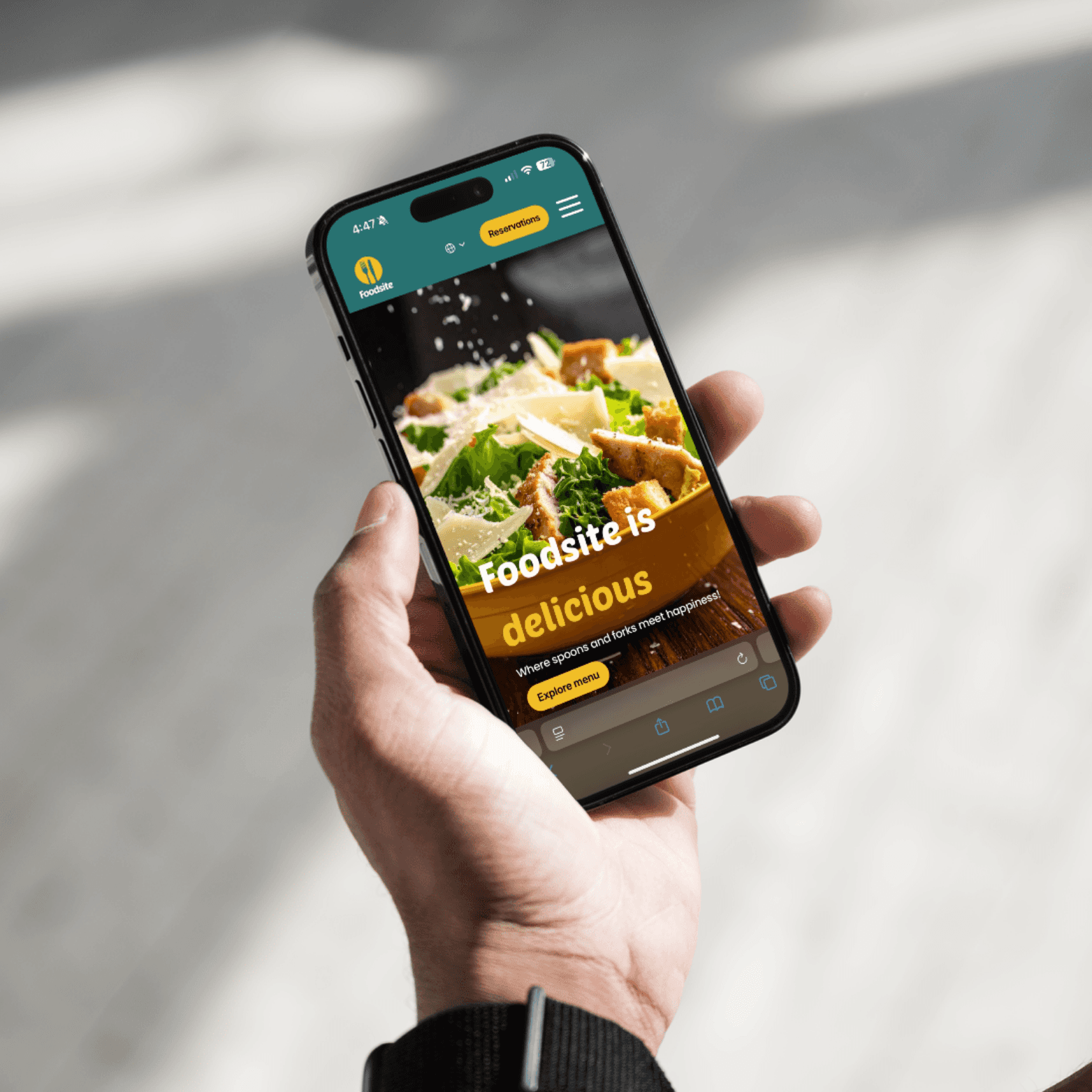
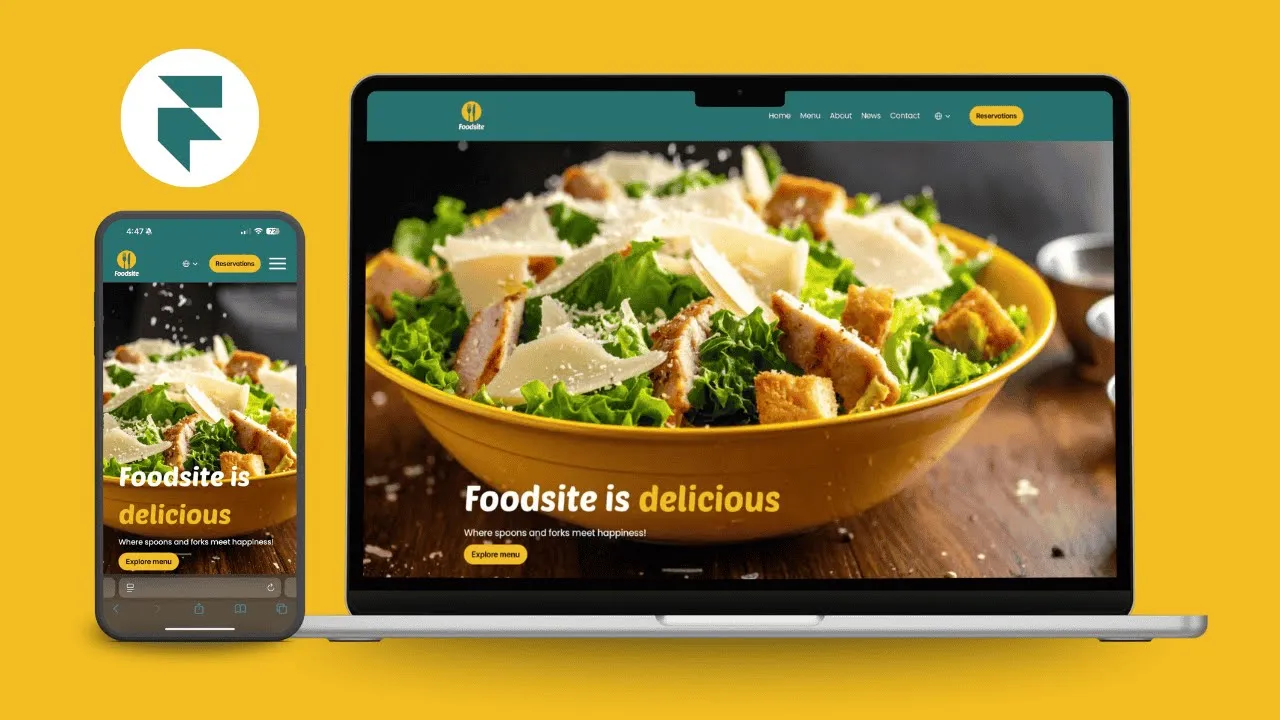
I have developed "Foodsite", a culinary business website template on the Framer platform, designed for commercial sale in the digital market industry. It targets restaurants, bakeries, and coffee shops looking to establish an online presence and is provided with a DIY user-friendly manual.
This project is a digital product available for sale in digital markets. It was part of the Digital Product Launch course at Quinnipiac University.
Background Research
Market Research
I conducted a structured market research of the digital product industry. I focused on products that support web development, including website templates, tools, planners, and tutorials suitable for both beginners and experts.
The market research revealed that Framer's existing culinary templates were either too generic, lacked interactivity, or were built for a single sub-niche, like coffee shops or burger joints.
There is a need for website templates for the culinary industry that are highly customizable and easy for non-tech-savvy users to implement.
Target Audience
Web developers managing multiple client projects who need a high-quality, customizable culinary template to reduce production time without sacrificing design quality.
Tech-savvy restaurant owners seeking to create their own independent website, but unable to hire website developer.
The core problems driving this project
An experienced web developer with several clients, facing tight deadlines, is seeking a modern and unique design template to expedite their work.
There is a lack of highly customizable site templates, especially in the culinary industry.
Many restaurant owners can't afford design or developers agencies and persue DIY solutions.
Even with the non-coding platforms, some technical background is necessary for product development.
Approach
Foodsite Framer template development was scheduled to occur in three phases:
Phase 1: Planning and initial building
Phase 2: Building the digital product
Phase 3: Testing, iterating and packaging the final product




Phase 1: Planning and initial building
Laying the groundwork
This phase focused on laying a solid structural foundation, achieved through various methodologies.
For more details, please see the Phase 1 report below this section.
Methodology
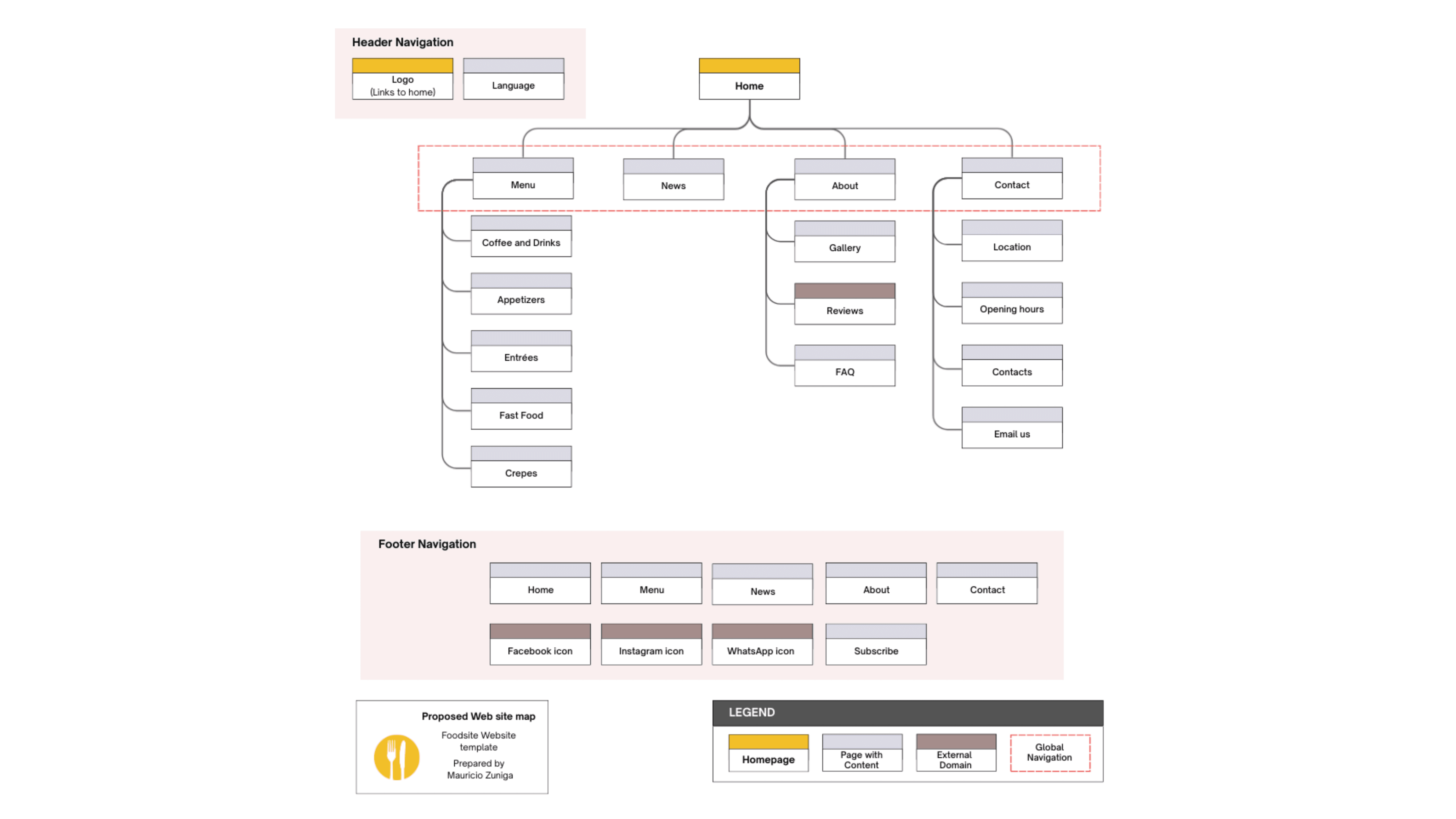
Map the information architecture.
Develop sitemaps and user journeys.
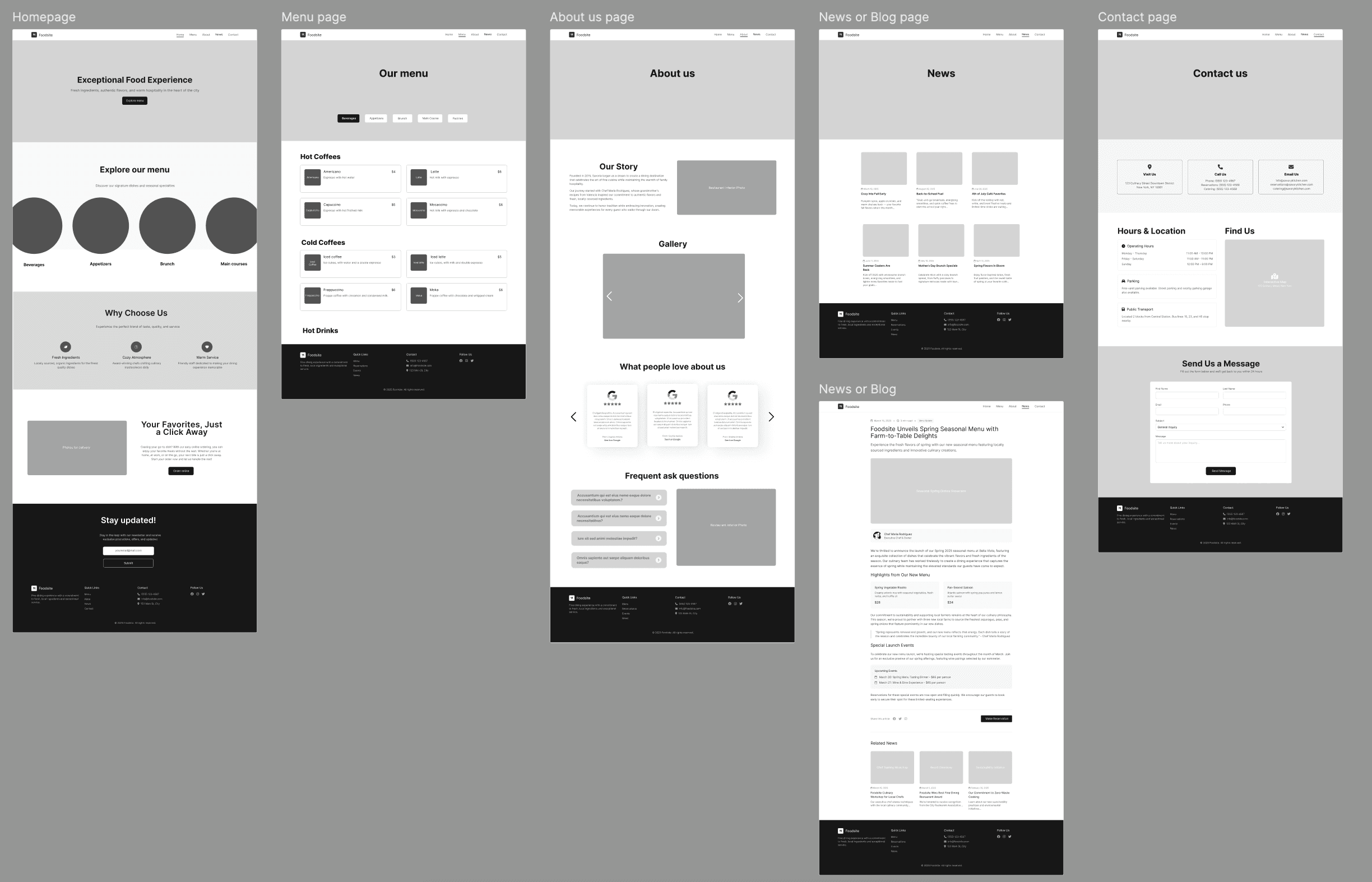
Design low-fidelity wireframes.
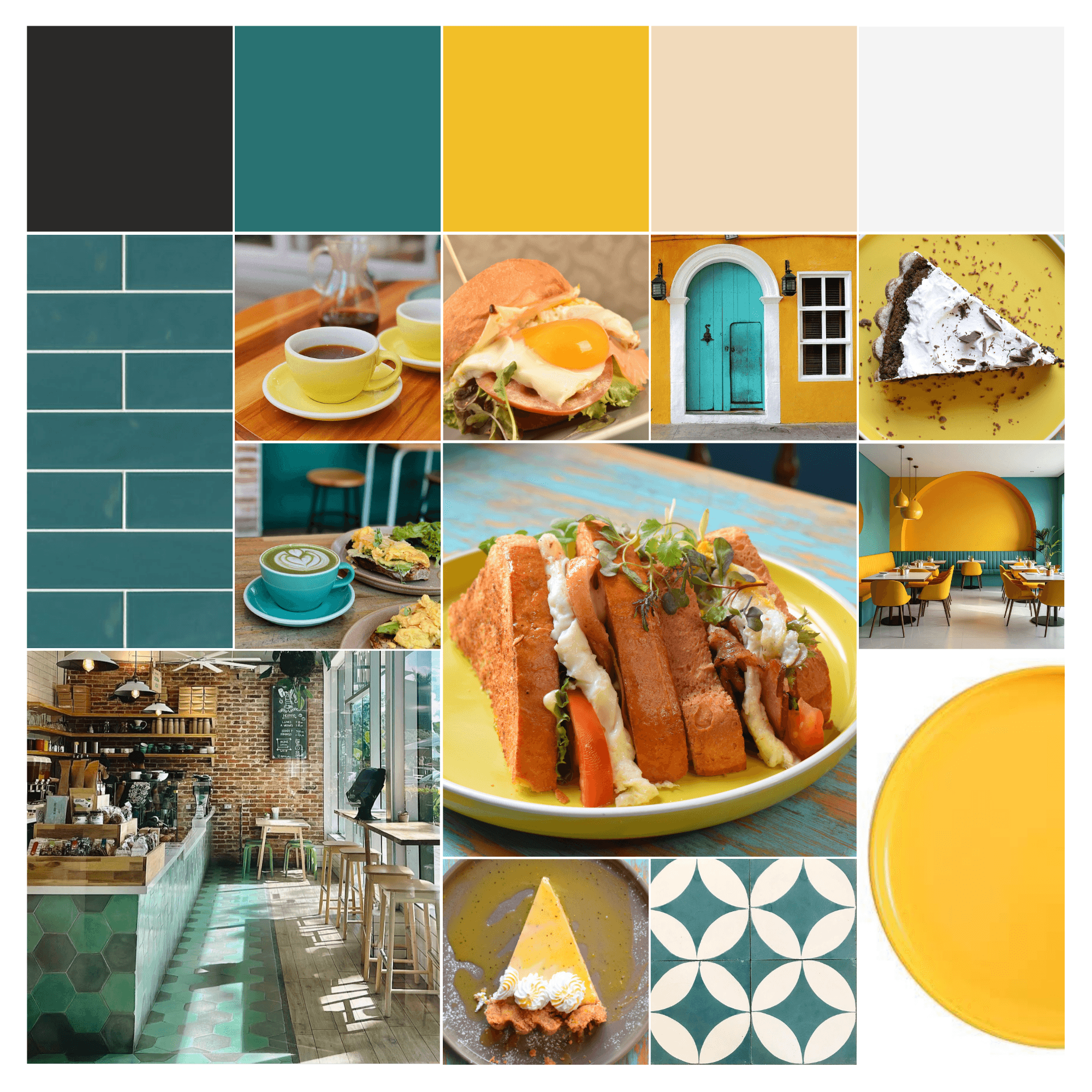
Define Branding.
Develop initial template components.

Phase 2: Building
Bringing Foodsite to life
This phase included product development in the Framer platform. The key components, including the homepage, menu, about, news, and contact, were fully developed.
Methodology
Conduct development of pages and components.
Integrate content.
Verify responsiveness across various platforms.
Start research on product delivery assets
Development of pages and components
Management Design System and Component Assets
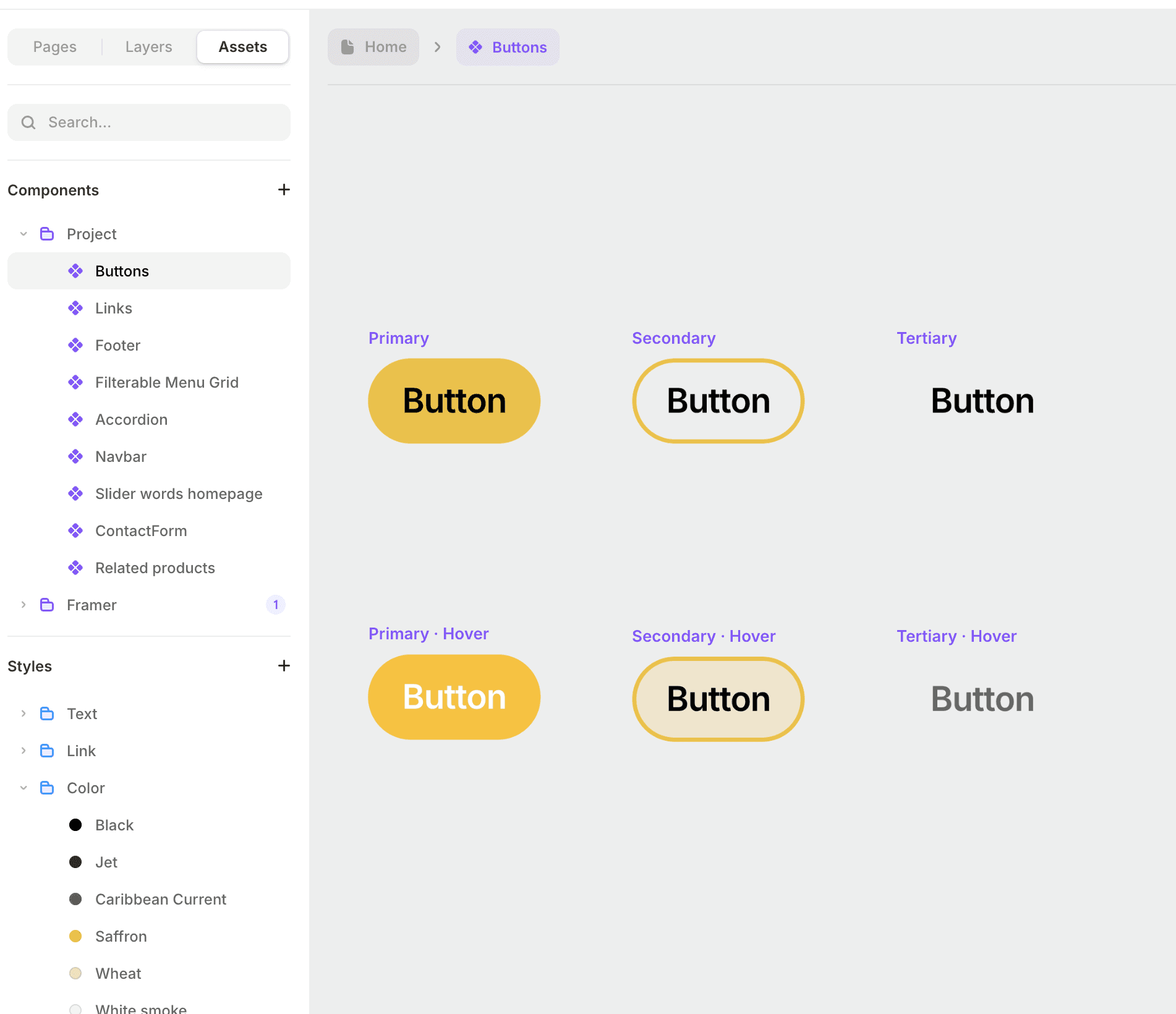
I created an intuitive management design system that allows users to modify a single component and automatically apply the change across the entire website. These include the color palette, semantic HTML tags, and content styling.
I developed all assets of the website template, including buttons, the footer, the nav bar, and interactive display elements.
Coding with Artificial Intelligence (AI)
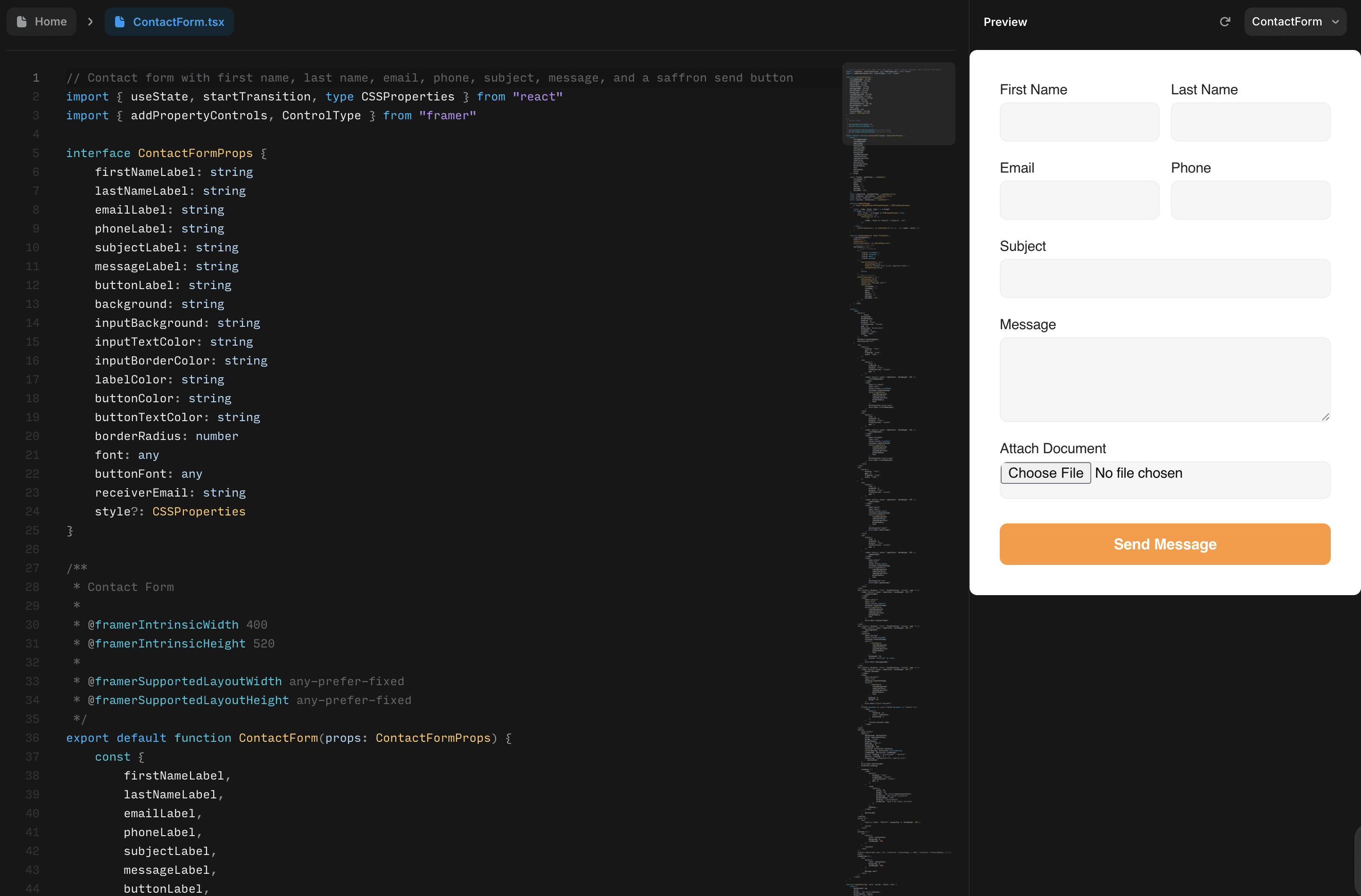
Certain elements in Framer were generated with AI coding. I employed the Framer AI coding feature, providing detailed prompts to create components tailored to specific needs. For example, I used this technology to develop a contact form that includes a document submission option for applicants. It is accessible across all device sizes, including computers, mobile phones, and tablets.
The main challenge: Avoid expensive plugins
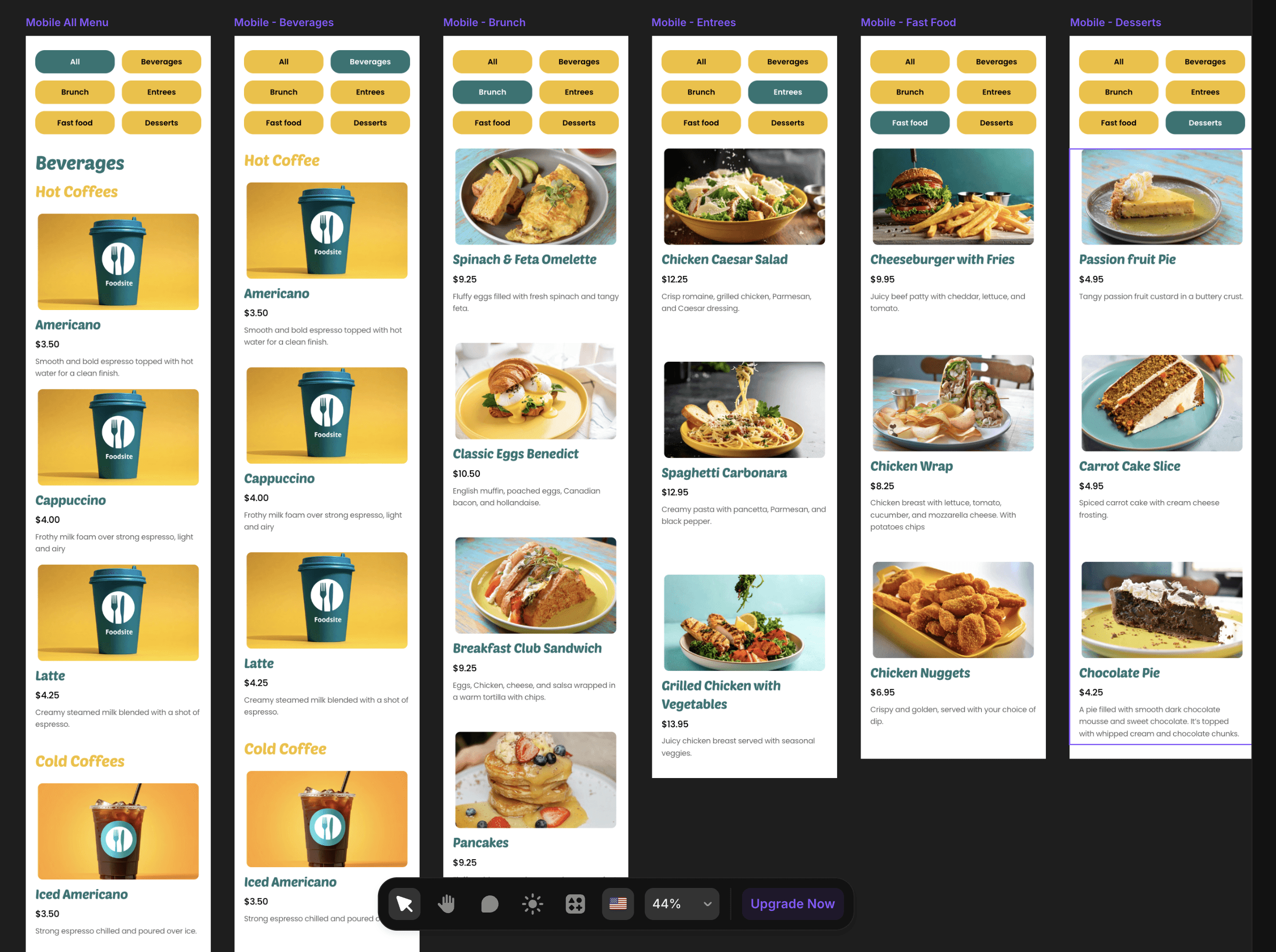
Framer has no native filtering solution, which is essential for long item lists such as the restaurant's menu. The standard workaround requires purchasing Superfields (priced at 109$ for commercial use). Instead, I created a novel component from scratch, using separate variables for each menu category. The goal was to keep the template lean and free of external dependencies.
For more details, please see the Phase 2 report below this section.

Phase 3: Test, iterate & packing
Improving through feedback and iteration
User feedback had led to key refinements, enhancing both usability and clarity. The product was polished, expanded with additional features, and prepared for distribution with a clear, user-friendly manual.
Methodology
Conduct user testing.
Analyze insights.
Make refinements to the product.
Start packing the product
User Testing
Methodology
Moderated remote testing
Two participants were recruited to represent distinct segments of Foodsite's target buyer audience.
Tasks:
Could you modify the color palette, typography, and button colors for the website template?
Can you add a new item to the Content Management System menu under the Fast-Food category? For example, Fish and fries for $10.
Go to the Foodsite website environment and locate the item you had added in the previous task
Refinements
Finding 1:
The Menu "All" category seemed lengthy and disorganized
Finding 2:
On the product page, the "Related products" section was displayed incorrectly
Finding 3:
The Content Management System seemed unintuitive for non-tech-savvy users
For more details, please see the Phase 2 report below this section.
Marketing and launching Foodsite
Marketing strategy
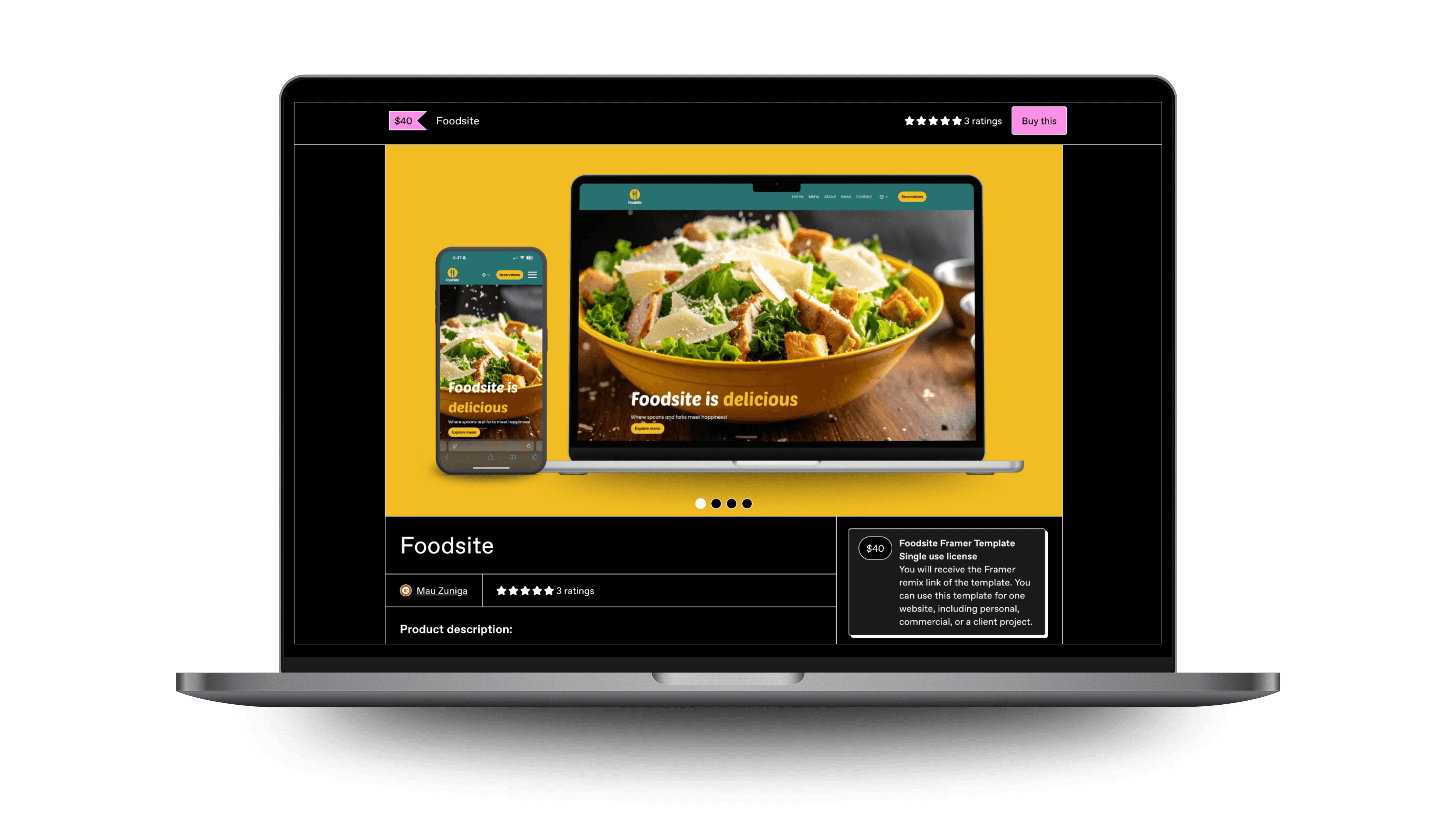
I priced Foodsite at $40 for a single-use license and $200 for an extended commercial license. To reach web developers, I chose the Gumroad marketplace as the main selling platform because of its relatively low sales commission and growing popularity among template users.
To reach savvy tech business owners, I created a commercial video that highlights the key pain points many restaurants owners face and that Foodsite aims to solve. A user-friendly manual is included with every purchase. I also posted on social media platforms such as LinkedIn and Twitter (X) to target both specific audiences, as well as in particular Facebook groups to promote Foodsite to restaurant owners.
Foodsite video commercial

Sales on
Gumroad

Visits on
Gumroad

Engagements
on LinkedIn
Comments
These are a few comments from Gumroad buyers and social media users that I’m especially proud of, highlighting the positive impact and engagement Foodsite has created.