

10 min
Every small business owner faces this dilemma at some point. Social media is free, fast, and where everyone's attention is. A dedicated website costs money, takes time, and feels almost old-fashioned in 2025, but it gives you more control. The choice between them isn't really about technology. It's about control, visibility, and the kind of business you're trying to build.
Restaurant owners argue not over social media versus websites out of enjoying marketing debates but because both cost money, demand time, and promise growth, yet they offer different value: one is immediate and visible, the other foundational and long-term. In a world with tight margins and fleeting attention, choosing poorly can be costly.
The truth is that this isn’t a fight between two interchangeable tools. Social media and a restaurant website serve different purposes, behave differently over time, and attract customers in different states of mind. In this blog, I aim to dive deeper into this dilemma and provide you with some tools for making the best decision for your business or client.
Why does this debate keep happening
Social media is where people already are. A restaurant can post today and potentially get likes, shares, comments, and even a spike in revenues tonight. That feedback loop feels like progress. A website, on the other hand, is quieter. It doesn’t usually give you public validation, and it can feel like paying for something customers “should” just find anyway.
But restaurants aren’t just selling food; they’re selling confidence. Guests want to know what to expect, how to book, how much it costs, whether it fits their dietary needs, what the vibe is, and whether it’s worth the trip. Social media can spark interest. A website can seal trust. Confusing those roles is where owners get stuck.
Social media: the loudspeaker
Social platforms are designed for discovery and momentum. They reward consistency, novelty, and engagement. For restaurants, that can be incredibly powerful because food is inherently visual and shareable, and hospitality is inherently human.
Social media's biggest advantage is reach without friction; your future guests can stumble across you while scrolling, without needing to decide to visit. It's also ideal for timely updates like specials, limited drops, or last-minute openings, and for building personality through tone, behind-the-scenes content, staff, chef stories, and neighborhood energy, fostering emotional loyalty before the first visit.
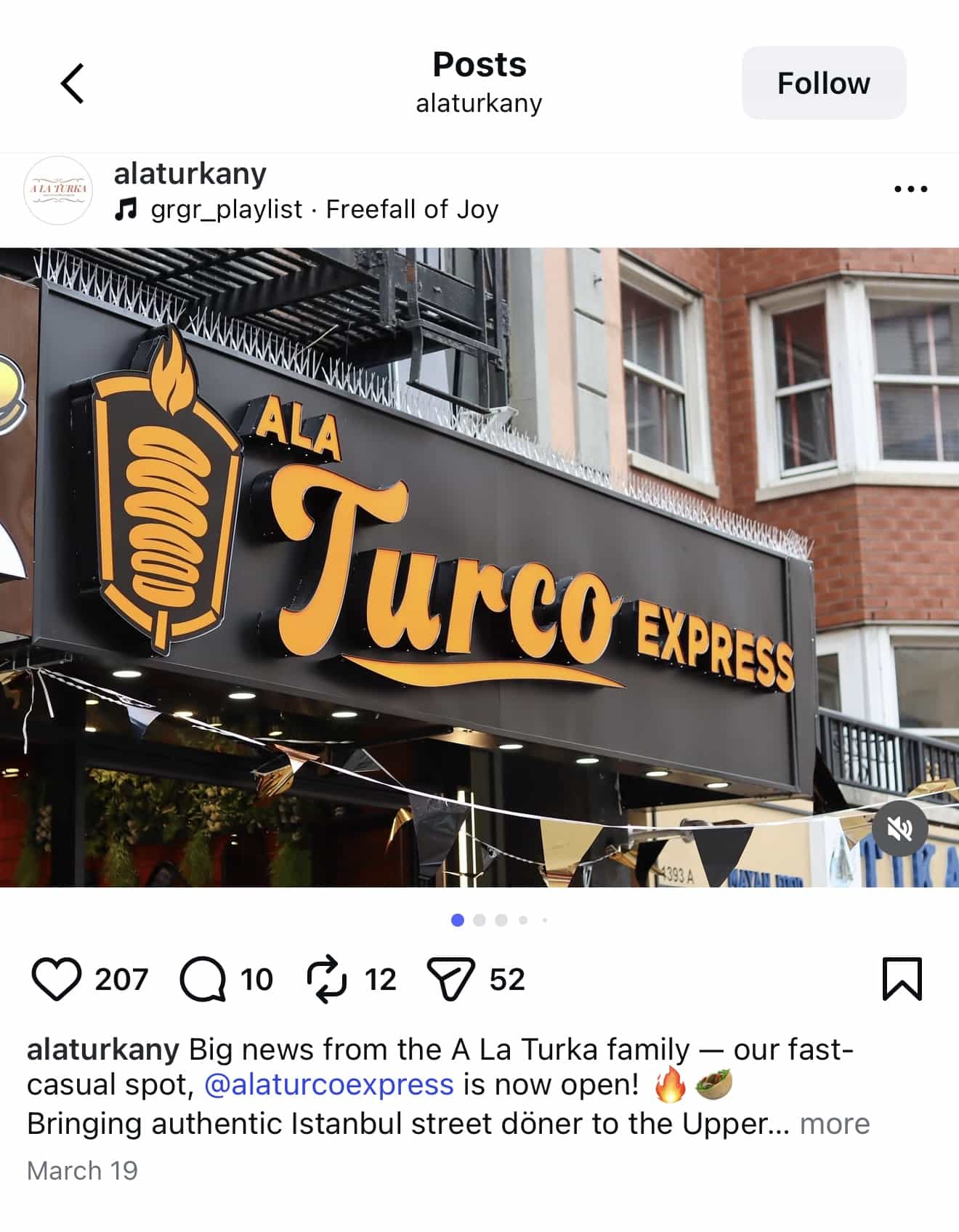
Instagram post of “A La Turka”, Turkish restaurant in Manhattan, announcing a new fast food service. Image taken from instagram "A la Turka Restaurant"
Social media also helps restaurants “borrow” credibility. When real guests tag your location, post photos, and share experiences, it acts like word-of-mouth at scale. A restaurant with an active, authentic presence can feel alive, which reduces the perceived risk for someone choosing where to eat.
" 76% of users say social content influenced a purchase in the last six months, including 90% of Gen Z"
Kaitlyn Gronek, Sprout Social Report 2025.
One specific audience that relies on social media as the main source of information is Gen Z. Sprout Social's 2025 research reveals that 41% of Gen Z turn to social platforms first when searching for information, surpassing traditional search engines at 32%. A restaurant that aims to attract this audience should operate in the playground where Gen Z hangs out – Instagram, TikTok, and Facebook.
The disadvantage is that you’re renting, not owning. Algorithms change. Reach fluctuates. A platform can throttle your visibility, push pay-to-play, or shift what content it favors. Even worse, social media can create a false sense of security. High engagement doesn’t always translate to revenue, and it can attract the wrong audience—people who love looking at food more than they love paying for it.
There’s also an operational burden. Social success requires steady production: photos, video, captions, community management, trend awareness, and prompt replies. For a small restaurant team, that can become another job layered onto already demanding work. Finally, social media is not built for clarity. It’s built for attention. A guest trying to confirm your hours, find parking info, understand a prix fixe policy, or check allergen details can end up frustrated in a maze of posts and outdated highlights.
In short, social media is excellent at sparking desire and staying top-of-mind, but it is unreliable as a single source of truth.
The restaurant website: the home base and the trust builder
A restaurant website is not just an online brochure. It’s your owned digital space, your most controllable, most stable channel. It’s where you decide what matters, what’s current, and what you want guests to do next.
The biggest advantage of a website is clarity. Hours, location, menu, reservations, private dining, accessibility, dress code, corkage policy, delivery links, gift cards, all about customer service. A well-structured website prevents confusion that leads to abandoned plans. If someone is already interested and ready to choose a place to eat, they often move from inspiration to verification. That verification frequently happens on a website, even if the journey began on social.
A website also improves findability in high-intent search. People don’t only browse restaurants on social; they search “best ramen near me,” “brunch outdoor seating,” “anniversary tasting menu,” or “gluten-free bakery.” A website gives you a chance to show up and to be understood by search engines, which are still one of the strongest drivers of intent-based traffic.
Websites are also better for conversion. They can guide a visitor cleanly toward reserving, ordering, calling, joining a newsletter, buying a gift card, or submitting an event inquiry. Social media can link out, but it’s not optimized to support a calm, confident decision.
Credibility is the essential element here. In September 2015, Verisign conducted a survey involving 787 U.S. internet users and 456 small businesses to explore their online habits and preferences — highlighting how consumers use the internet and the benefits of having an online presence for businesses. They found that 80% prefer a business to have a website instead of a social media page. 84% believe that a dedicated website enhances the credibility of a business.
The disadvantages are the upfront cost and the temptation to treat it as a one-time project. A site that isn’t maintained can become a liability. Outdated menus, incorrect hours, broken reservation links, and stale announcements actively harm trust. Websites also need intentional content decisions. A restaurant site that tries to say everything at once, without hierarchy, can become visually beautiful yet functionally confusing. And if you invest in design but neglect performance, mobile usability, and loading speed, you may build something elegant that quietly loses hungry customers.
In short, a website is the authoritative source of truth and a conversion engine, but it only performs if it’s built and maintained as a living operational tool.
The different purposes each one fulfills
A clean way to think about this battle is to treat social media and websites as two different moments in the guest journey.
Social media excels when the guest is in discovery mode. They may not be hungry yet. They may not even be looking for a restaurant. They’re open to being surprised, entertained, and inspired. Your job there is to create appetite, emotion, and familiarity. Social is where you build top-of-funnel attention and brand texture.
A website excels when the guest is in decision mode. They are hungry, planning, coordinating with others, comparing options, or ensuring the experience fits a need. Your job there is to remove doubt. The website should confirm the choice and make action effortless. The website is where you protect the sale.
When owners pick only one, what they’re really doing is betting that their customers will either stay in discovery mode long enough to convert without clarity, or arrive ready to decide without needing inspiration. In practice, most guests need both.
Which route makes sense for which restaurant realities?
When I met the owner of “360 Café,” a restaurant with a strong social media presence, he seemed frustrated by the limited options those platforms offer. “Is there a way to reserve tables on Instagram?” he asked me during our first meeting. When I created his website, I focused on adding features those social media platforms often lack, such as ordering, table reservations, and catering bookings.
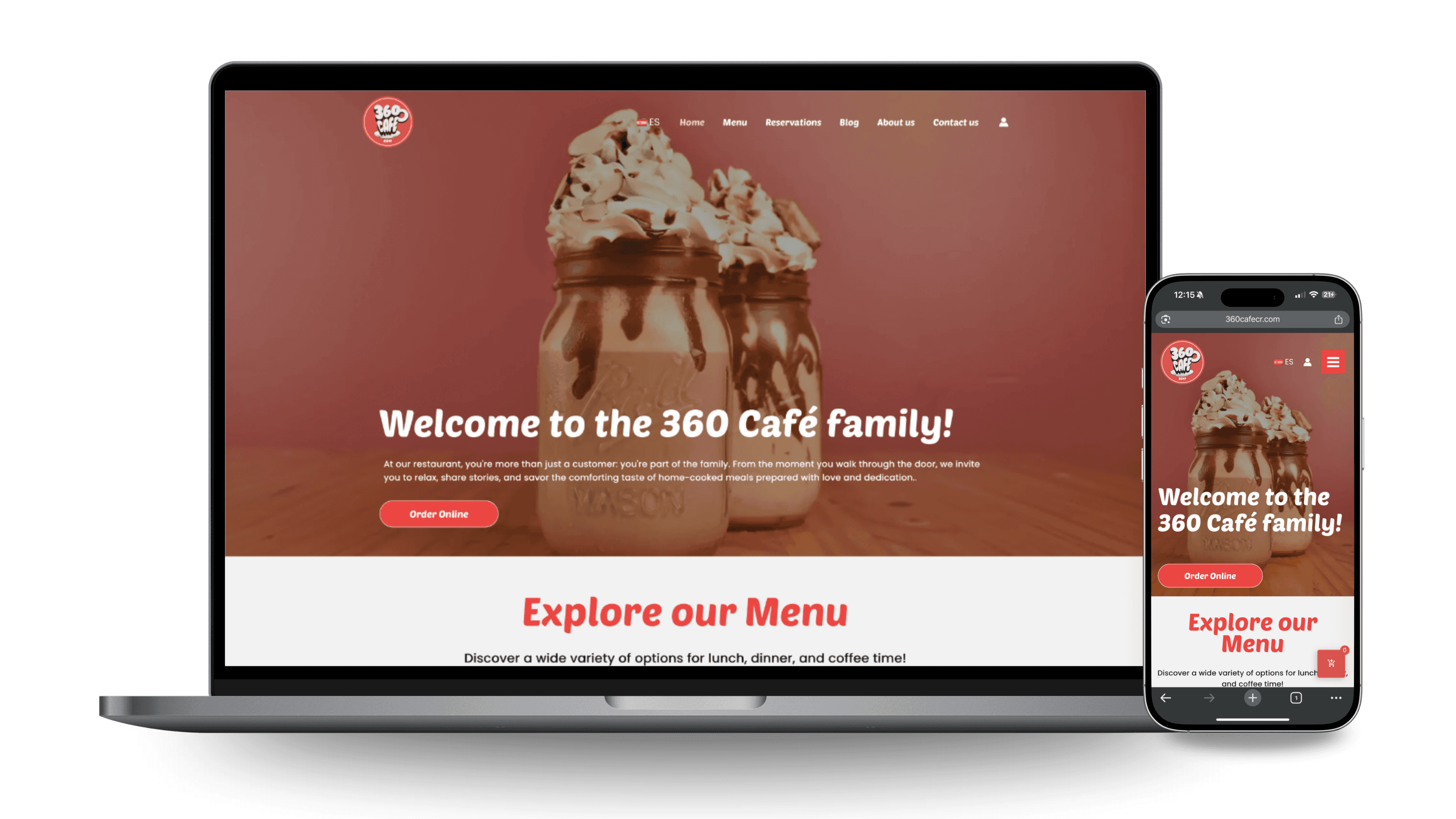
360 Café Costa Rica Website. Image by the author
If you are new, unknown, or in a competitive neighborhood, social media can create quick awareness and give you a voice. It is often the fastest way to show what’s special about you and generate early foot traffic. But if you’re taking reservations, offering catering, hosting events, selling gift cards, or managing complex menus and policies, a website becomes essential sooner than most owners expect.
If your restaurant relies heavily on repeat local traffic and community relationships, social media may feel like it “is” your marketing. Yet a website can still outperform it when it comes to capturing high-intent searches, answering questions quickly, and reducing phone calls that interrupt service.
If you run multiple locations, have seasonal menus, or are building a brand meant to scale, a website is the backbone that keeps information consistent and dependable. Social media can amplify, but it can’t replace a central system of record.
Strategy tips to navigate toward the right choice
The best strategy is to stop framing this as a one-or-the-other dilemma and instead build a simple ecosystem with clear roles.
Start by deciding what you want to own versus rent. Social media is rented attention, and it’s powerful, but it’s not guaranteed. Your website is owned presence, and it’s stable, but it requires care. If you can only fund one meaningful improvement right now, prioritize the channel that fixes your biggest leak. If guests often ask basic questions, struggle to find menus, or get confused about hours and reservations, your leak is clarity, and you should invest in a website that behaves like a helpful host. If you have clarity but not enough awareness—empty seats despite strong operations—your leak is attention, and you should invest in social content that showcases what makes you worth choosing.
Design your website as a conversion tool, not an art project. The site should load fast, work beautifully on mobile, and make the next step obvious. It should feel like the restaurant but act like a service counter: quick answers, easy booking, clear menu access, and confident reassurance. Don’t hesitate to use restaurant website templates to make this process faster and easier. I highly recommend “Foodsite,” a template I created for this purpose, available at this link.

Foodsite - Framer website template. Image by the author
You can use social media as your living storytelling layer that always points back to a reliable home base. Social posts should not have to carry critical information forever. Instead, let social create desire and direct guests to a website that confirms details and captures reservations, orders, inquiries, and emails.
Finally, think in terms of compounding value. Social media rewards constant output; websites reward thoughtful structure. A well-made website can quietly generate returns for years. A strong social presence can spike demand in days. The most resilient restaurants combine them so that short-term attention feeds long-term trust.
Conclusion: stop choosing sides and start choosing outcomes
Social media and restaurant websites aren’t opponents; they’re specialists. Social media sparks curiosity like energy in a room or a scent in the street, while a website answers questions, confirms plans, and makes the experience seamless. Instead of asking which platform is "better," consider what your restaurant needs most: discovery, trust, buzz, or bookings. Build the channel to address that now and connect it to others to turn attention into confident guests who show up.
Let me know which route you end up choosing. Stay tuned for the next blog post about “sexy” ways to incorporate boring data into your digital products.
Share this post



Design Strategy
Apr 25, 2026
When One Size Fails: Strategies for Designing Digital Products for Targeted Groups
Designing for everyone often serves no one. Effective digital products come from content, interactions, and strategy tailored to a specific audience. These should match their needs, context, and behaviors.
Digital Strategy
Apr 18, 2026
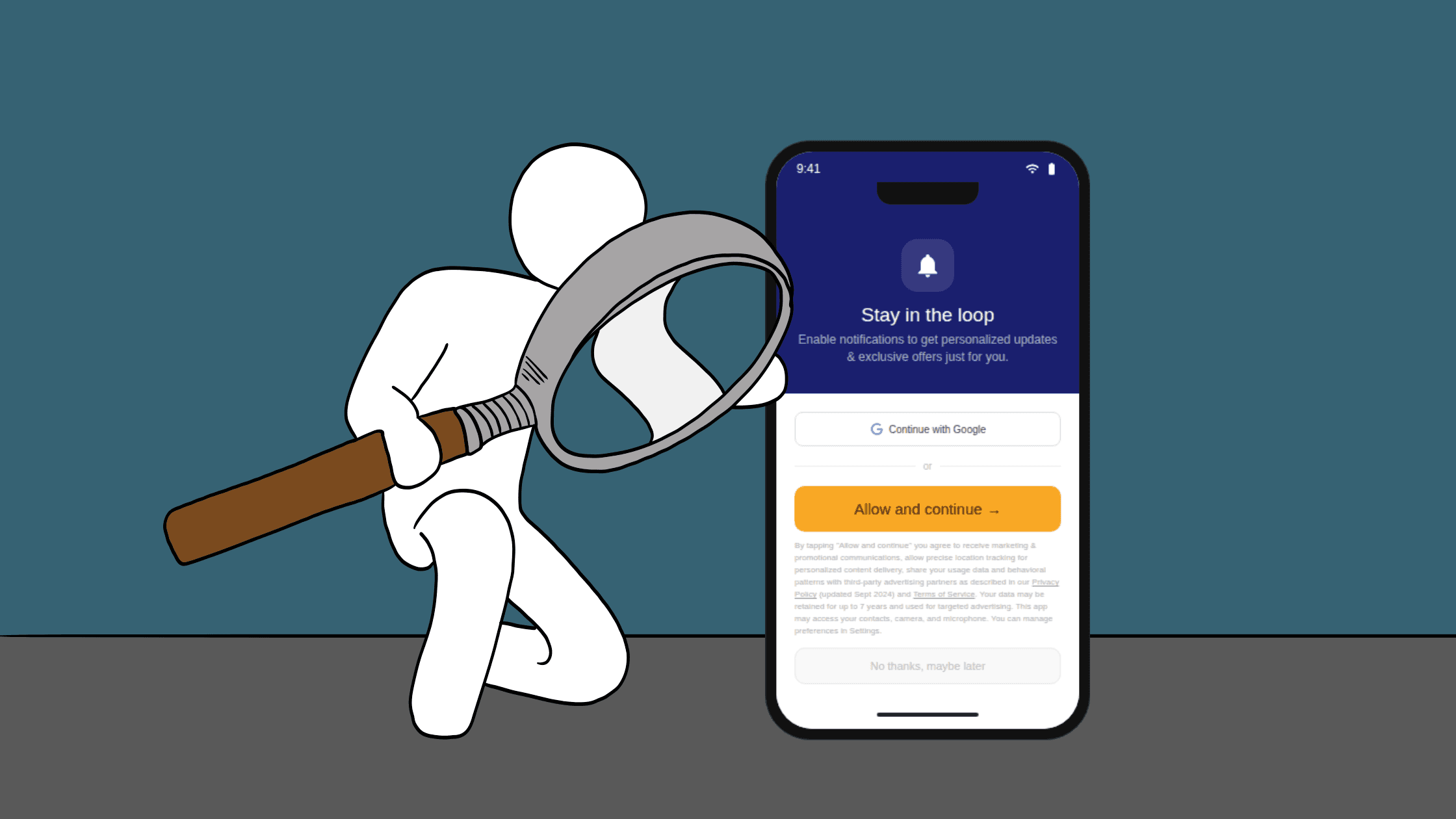
Labels, Warnings, and Other UX Landmines (and How to Design Them Well)
Mandatory information like fine print, disclosures, and warnings appear throughout digital experiences as required by legal teams. The issue isn't their presence but how they're handled. Top products don't just seem compliant; they present this information clearly.

Creative Design
Apr 5, 2026
Spicing up the message – Using food in design
Food is one of the most powerful tools in visual communication. In Spicing Up the Message, we explore how food crosses cultural and emotional boundaries to deliver messages that words alone can't.