


4 Min
"Food is an intimate language that everyone understands, everyone shares. It is the primary ambassador of first contact between cultures."
Jenifer Lee, "The Fortune Cookie Chronicle"
Using food to convey your message is one of the most quietly powerful strategies in visual communication. It works because food sits at the intersection of biology, culture, memory, and desire. We may disagree about politics, aesthetics, or taste in music, but we all understand the basic stakes of nourishment, freshness, appetite, and decay. That makes food a kind of universal shorthand, capable of carrying meaning far beyond recipes and restaurant reviews.
When I created a commercial for the healthcare industry, I decided to use food elements as the vehicle. This gave me the flexibility to deliver an authentic, slightly humorous, yet important message to a large audience. In this blog, I am going to explore the essentials of how you can use food to deliver a powerful message.
Beach Potato Commercial - Motion Video. Animation and video created by the author
Food as a non-culinary messenger
Food serves as a powerful non-culinary messenger because it can be both literal and symbolic. Literally, food is tactile: it glistens, bruises, steams, drips, cracks, and stains. These visual cues convey motion, rhythm, and transformation without the need for complex sets or narration. For example, the Beach Potato videoclip shows two types of “skin”: the literal skins of fruits and vegetables and the metaphorical skin we protect. The transition of the potato's skin visually communicates a message over time; viewers see a brown, protected skin and later a red, grilled one, implying UV damage without words.
Symbolically, food carries stories: bread suggests comfort, cake signifies celebration, fruit hints at ripeness and health, and spice can represent heat or risk. Since these meanings are familiar, food props can replace dialogue, especially in short-form advertising and storytelling.
Food also activates the senses indirectly; seeing a lemon being cut almost lets viewers smell it, and melting chocolate can evoke taste. This sensory mirroring creates warm, receptive attention, making messages about health or safety more acceptable. People are more likely to engage with a playful or satisfying image than a lecture, allowing serious messages to be delivered softly through pleasure.
Food in motion animation
In motion work, food holds added value as it beautifully represents transformation, a key element of this artwork. Food can show clear before-and-after states; fresh to rotten, raw to cooked, whole to sliced, glossy to burnt, colorful to gray. These transitions can be part of themes like protection, damage, healing, risk, and prevention.
Using food in motion design allows gentle communication of difficult issues such as illness, aging, anxiety, body image, environmental collapse, or violence. A bruised apple can suggest fragility without injury; mold can indicate neglect or contamination without graphic imagery; overfilled plates can imply excess or pressure without targeting individuals. Its familiarity keeps viewers oriented, while its symbolism calibrates intensity. Unlike other vehicles, food as a messenger offers more design options to communicate your message.
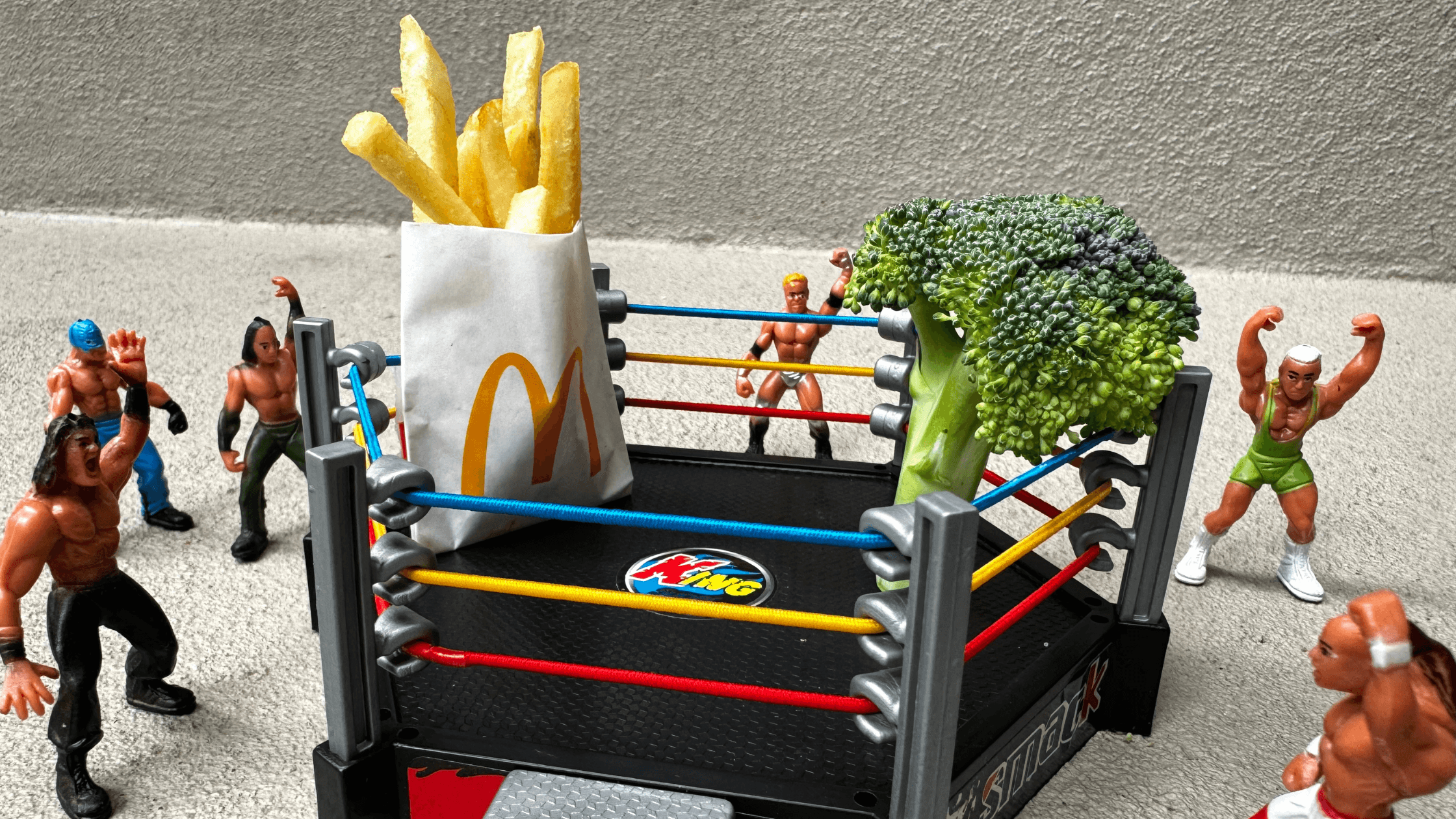
Broccoli vs. French Fries - Round 1 Blog. Image created by the author
Using Food in your design – a few tips for beginners
Choose the right food for the job
Match the ingredient’s built-in meanings to the message you’re trying to land. Citrus can signal freshness and energy, bread can suggest comfort and everyday reliability, and something charred can imply danger or damage. When the metaphor is “native” to the food, the audience understands it immediately and it doesn't feel forced.
Plan for how the food will actually behave on camera or in motion
Some foods oxidize, sweat, melt, bruise, or collapse quickly under lights, which can be an advantage if you want transformation, or a problem if you need continuity. Test early, because timing, temperature, and handling often determine whether the shot reads as appetizing, comedic, or unsettling.
How familiar is your audience with the food?
Use familiar foods when you need broad comprehension, and more specific foods when you want cultural precision. If the campaign must be understood in two seconds, lean on widely recognized items whose forms and textures read immediately. If you’re speaking to a particular community, specificity can add authenticity, but it should come from respect and research rather than novelty.
Pay attention to the sensory cues
Design the sensory cues, such as color, texture, and sound, as part of the concept, not as decoration. A glossy surface can communicate protection or “finished” performance, while a dry, crumbly texture can suggest fragility or neglect. Even without taste and smell, audiences “hear” crunch and “feel” stickiness visually, so your lighting, macro detail, and sound design should reinforce the same idea.
Conclusion
Food serves as a powerful non-culinary storytelling tool because it’s instantly understandable and emotionally impactful. When ingredients are viewed as symbols and cultural signals, not just props, they quickly convey protection, desire, risk, care, or change with clarity. Successful campaigns don’t just “use food”; they align its meaning, behavior, and significance to communicate naturally. In this way, food becomes a medium for ideas that are memorable and shareable.
So if you end up using food in your projects, don’t forget to let me know and share your experience. Also, stay tuned for next week's blog, where I will address the ultimate debate – what’s better, a dedicated website or a stronger social media presence.
Share this post



Design Strategy
Apr 25, 2026
When One Size Fails: Strategies for Designing Digital Products for Targeted Groups
Designing for everyone often serves no one. Effective digital products come from content, interactions, and strategy tailored to a specific audience. These should match their needs, context, and behaviors.
Digital Strategy
Apr 18, 2026
Labels, Warnings, and Other UX Landmines (and How to Design Them Well)
Mandatory information like fine print, disclosures, and warnings appear throughout digital experiences as required by legal teams. The issue isn't their presence but how they're handled. Top products don't just seem compliant; they present this information clearly.

Digital Strategy
Apr 10, 2026
Social Media vs. Your Own Website - Where to invest?
Every small business owner faces the same question: invest in social media or build a dedicated website? The answer depends on what your business needs most. This post breaks down the strengths, limitations, and ideal use cases for each so you can make a smarter, more strategic choice.