

9 min
The most common mistake in digital product design is treating the audience as a vague mass and hoping usability best practices will cover the gaps. I must admit I have made this mistake more than one time. Over the years, I have come to realize that good UX helps almost everyone, but “good” is not the same as “right.” Products become truly effective when they fit the motivations, constraints, language, risk tolerance, and environments of the people they serve.
Designing for Gen Z isn’t just about adding bold type and trends; designing a tourism website for international travelers isn’t simply about translating pages. Targeted design means making deliberate decisions about content, interaction patterns, trust cues, performance, accessibility, and even business rules so the product feels intuitive, credible, and worth returning to for that specific population. In this blog, I will dive deeper into this topic and aim to provide you with strategies to avoid common UX landmines.
Why targeting matters, and what’s at stake
Targeting a product to a specific audience is less about excluding others and more about removing friction for the people you most need to serve. A few years ago, I conducted a thorough analysis of the website of an adult education center that primarily serves non-English-speaking students. The amount of clutter, duplication in the information architecture, and the lack of translation options negatively impacted the user experience on that site. My proposed architecture kept it simple and task-oriented to better serve that specific target audience. Read more about the development process on the button below.
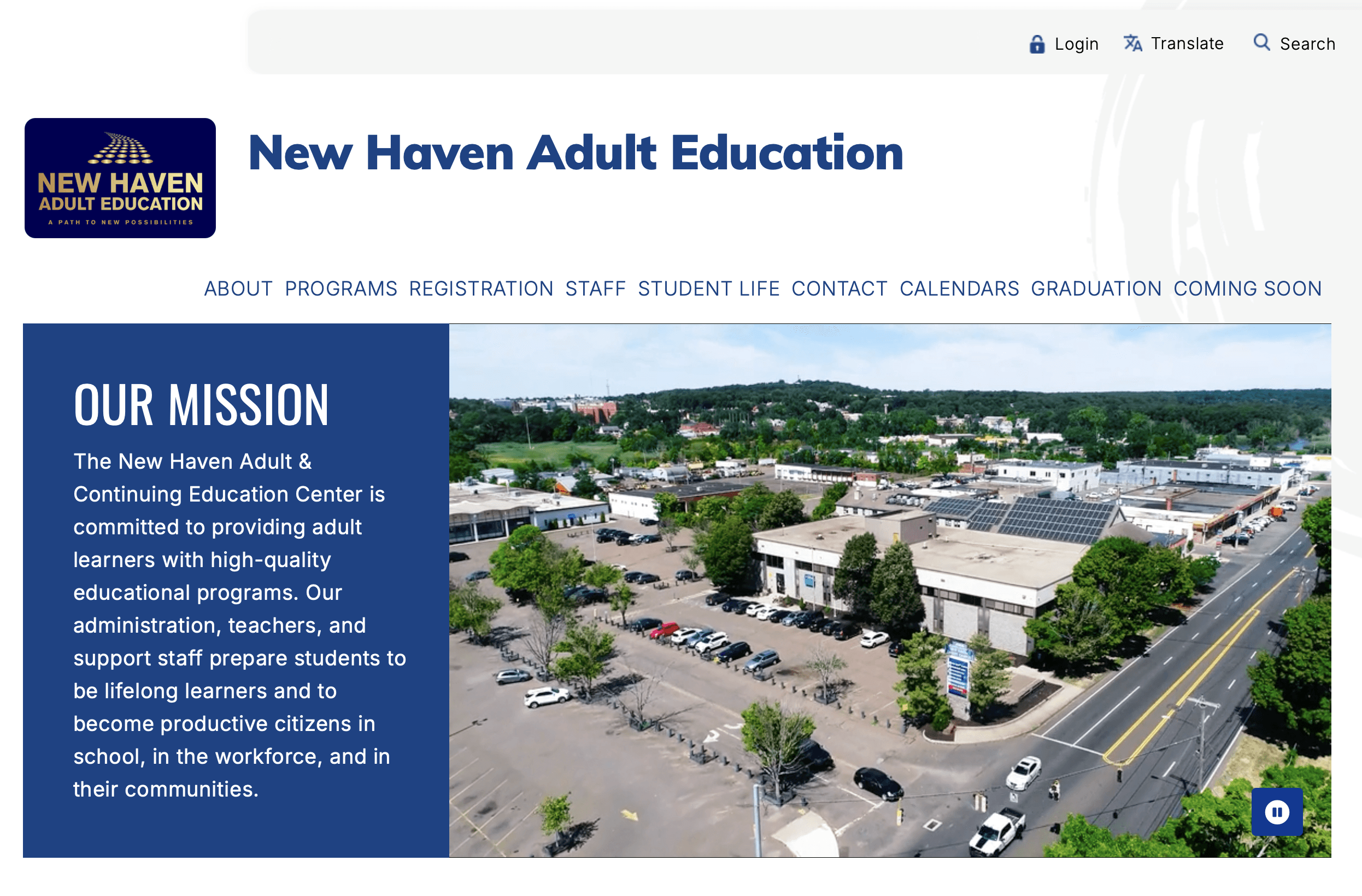
The New Haven Adult Continuing Education Center website (https://www.nhaec.org/)
I have learned from that experience that every digital product has a primary job: to help someone accomplish something in real-world conditions. Those conditions vary dramatically across groups. A Gen Z user may evaluate an app in seconds and rely on social proof, visual clarity, and immediate value before committing attention. An international traveler planning a trip may arrive with high uncertainty, multiple decision-makers, language limitations, and a strong need for reassurance about pricing, safety, and refunds. If the experience doesn’t align with those realities, you’ll see it in drop-offs, support tickets, negative reviews, and poor retention.
It also matters because targeting clarifies trade-offs. When you know who you’re designing for, you can decide what to simplify, what to make prominent, and what to postpone. Recently, I conducted an UX research analysis of the usability of Mexico’s main tourism website, visitmexico.com. While the site primarily aims to attract international tourists, only part of the content is translated into English, and the user pathways on the site seem extremely complicated for non-Mexicans. My analysis included several recommendations to shift the focus from local Mexican residents to international tourists, keeping the site’s main aim in mind – providing tourism information to those who need it most. Read more about my analysis on the button below.
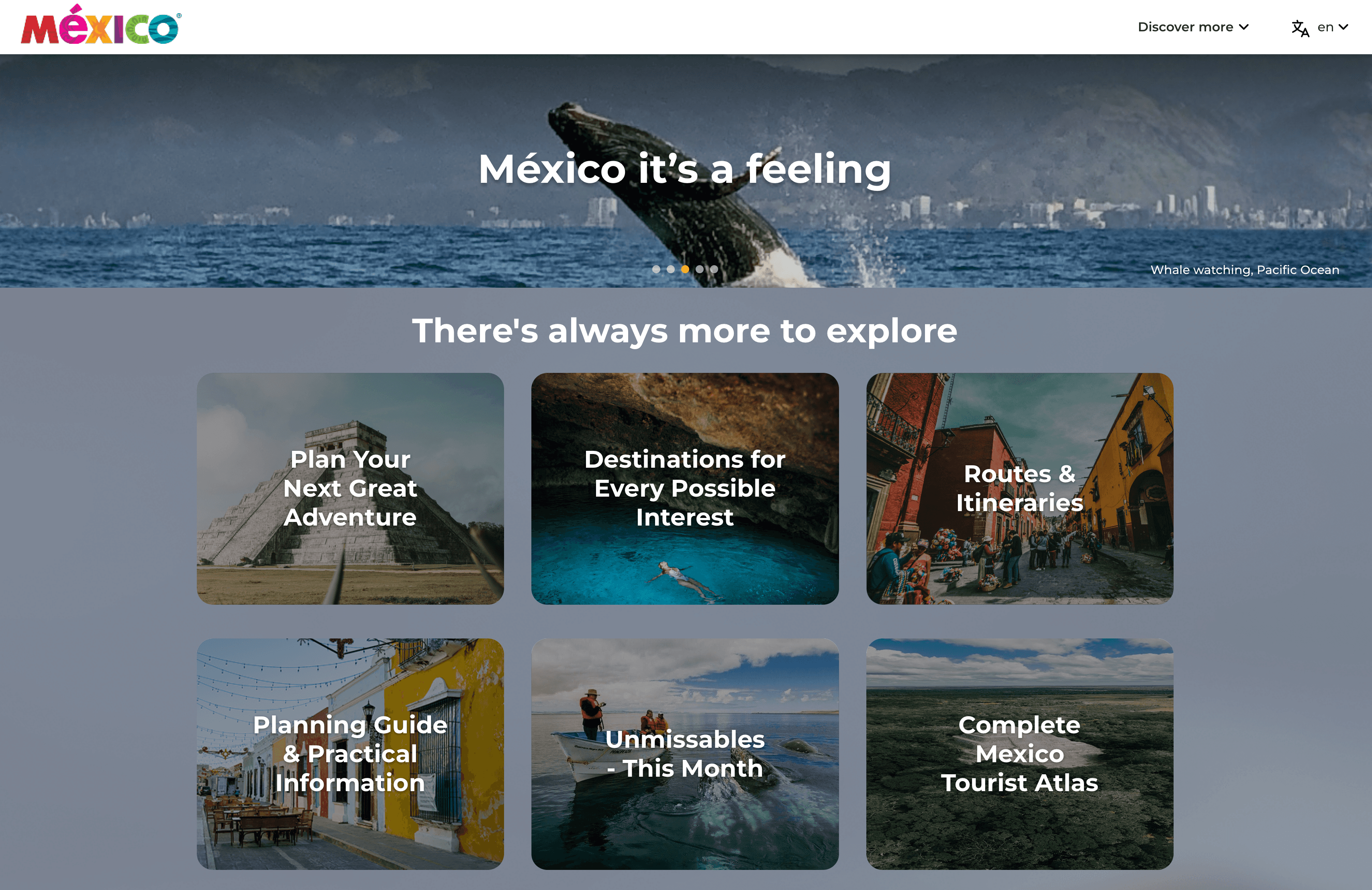
Visitmexico.com. Official Mexico Tourism website. Image taken from the website
What I have learned here is that you can’t please both domestic citizens and international travelers. Trying to please both equally can produce a muddled interface that satisfies neither. If you aim for the local audience, you may hide critical details such as currency, visa requirements, transit options, tipping norms, and local emergency numbers, all the information international travelers need. Audience targeting is a way to design for clarity, not just more features.
The core challenge: “target population” is not a persona, it’s a context
A common pitfall is defining a target audience by labels alone: Gen Z, seniors, parents, luxury travelers, small business owners. Labels are a starting point, not a specification. What actually changes design decisions are contextual truths: how people discover the product, what they fear, what they’re trying to prove to themselves before committing, what devices and network conditions they use, what accessibility needs are common, what social norms and privacy expectations apply, and what external systems they must navigate.
Two users in the same demographic can behave differently if their context differs. A 19-year-old student on prepaid data will interact with your app differently than a 19-year-old with unlimited 5G; an “international traveler” planning from home on a laptop differs from one standing in an unfamiliar street on a phone with roaming charges.
This is why audience-first design starts by translating demographic intent into behavioral requirements. My team designed a mobile app called “WalletWise” to provide financial education to Generation Z users. During our first meeting, we discussed the target audience in depth and concluded that we cannot simplify our work by claiming we are designing for “Gen Z.” We were actually designing for a set of likely behaviors: rapid scanning, a strong preference for authenticity, high sensitivity to lag and clutter, comfort with gesture-based and camera-first flows, and a low tolerance for heavy sign-up gates unless value is immediate. Read more about our work on WalletWize at the button below.
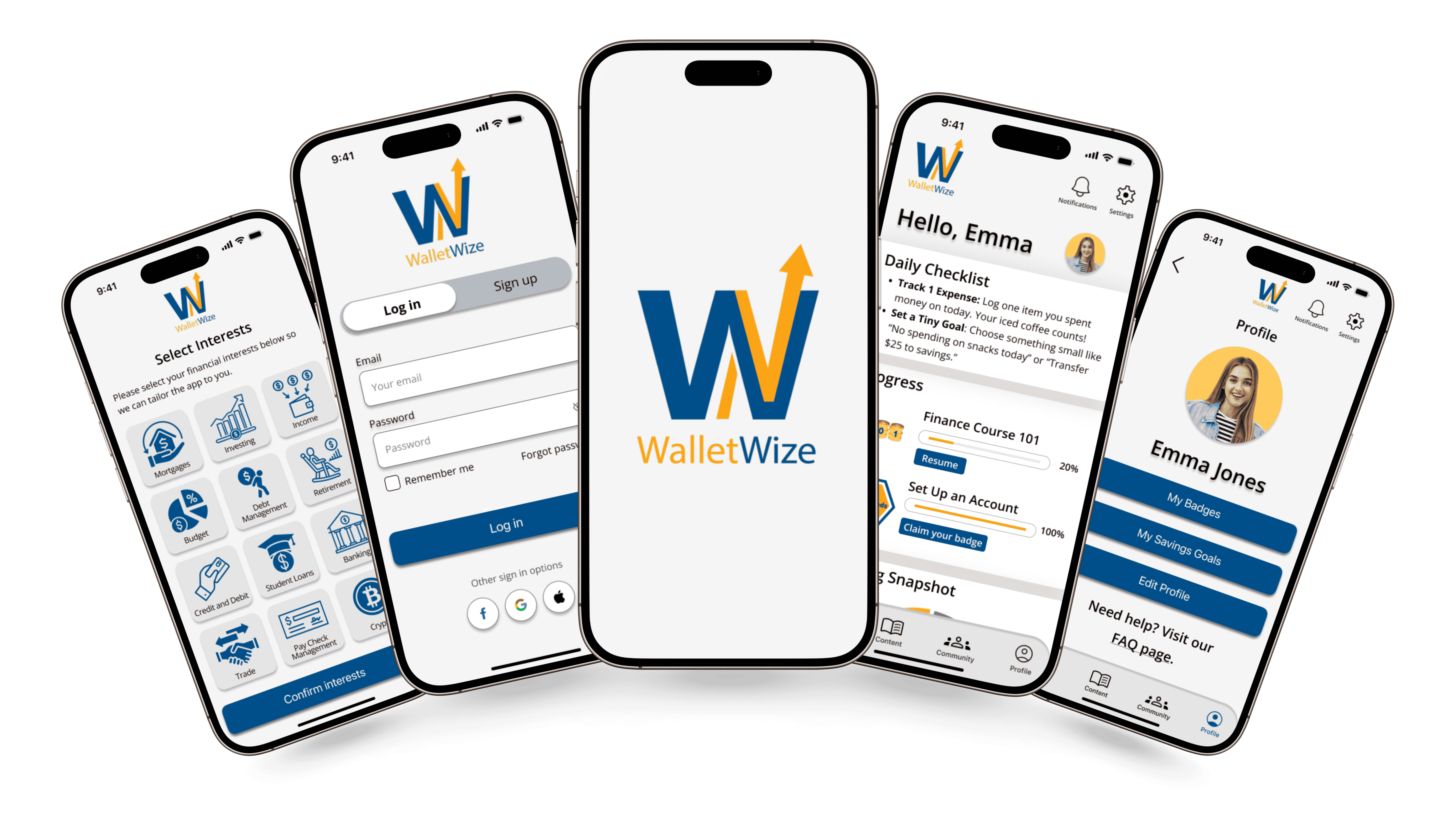
WalletWize: A financial eduaction app for generation Z. Image created by the author
Strategies for designing and developing for a target audience
Define the “critical moments”
What are the “critical moments” that matter most to your audience? Define them, then design backward. Critical moments are the points where users decide whether to trust you, continue, pay, or abandon. For Gen Z, those moments often happen extremely early: first open, first scroll, first attempt to create something, first share. Your onboarding, information density, and initial payoff need to deliver value quickly without making the user feel managed. For international travelers, critical moments commonly include price comprehension, confirmation of availability, payment confidence, and reassurance about support when plans change. The design should prioritize certainty: clear totals, transparent policies, and easily accessible help.
Invest in audience-specific research
This research may be useful for the decisions you need to make. Instead of broad “what do you like?” questions, focus on what influences behavior: what signals credibility, what creates anxiety, what makes someone share, what makes someone purchase, what causes them to bail out. When researching Gen Z, you may discover that the language of marketing matters less than the perceived authenticity of the experience and the ability to personalize quickly. When researching international travelers, you may learn that users don’t merely want translation, they want localized meaning. A phrase translated word-for-word can still be confusing if it assumes local knowledge about transportation, neighborhood safety, holidays, or medical care. Good research reveals not just preferences, but misunderstandings that your product must prevent.
There are published scientific models that may help predict the target audience of a specific website. These models can be implemented before launching your final product to validate that you are actually reaching your target audience. For example, one model, published in 2019 by Kim et al. in the Journal of Information and Management, uses easy-to-measure variables as part of the model.
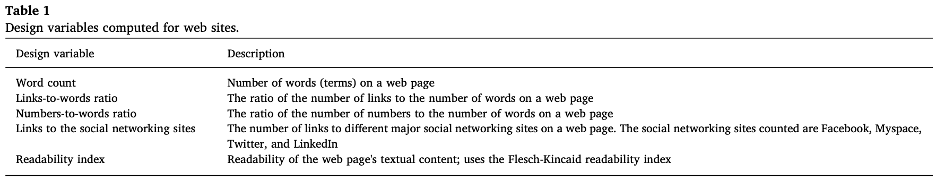
Information and Management. Taken from Kim et al, 2019
Consider your audience's views on their desired tasks
Design the information architecture to match your audience's mental models. Gen Z prefers lightweight, reversible exploration with feeds, tags, creators, and trends, favoring discoverability through curated collections, clear categories, and preview options. International travelers think in journeys, from inspiration to post-trip, and a website that aligns with this flow reduces cognitive load and boosts conversions by meeting users where they are.
Make trust a designed feature, not a footer link.
Trust is always important, but its triggers change by audience. For example, tourists often need proof of reliability: reputable partnerships, verified reviews, clear cancellation policies, transparent fees, and visible customer support. Showing “why this is safe” should be part of the flow. When displaying prices, include what’s included, how currency conversion is handled, and whether taxes or service fees are added later. When presenting accommodations or tours, show verification status, review recency, and what happens if something goes wrong.
One landmark study on this specific target population was published by Kochling et al. in 2022 in the Journal of Information Technology and Tourism. 1820 German millennials explored tourist websites and documented their impressions in a dedicated online questionnaire. The research found that websites with a high level of experimental design yield a significantly better user experience. Taking those findings into account in the pre-design phase may significantly improve your outcomes if you are targeting those millennials.
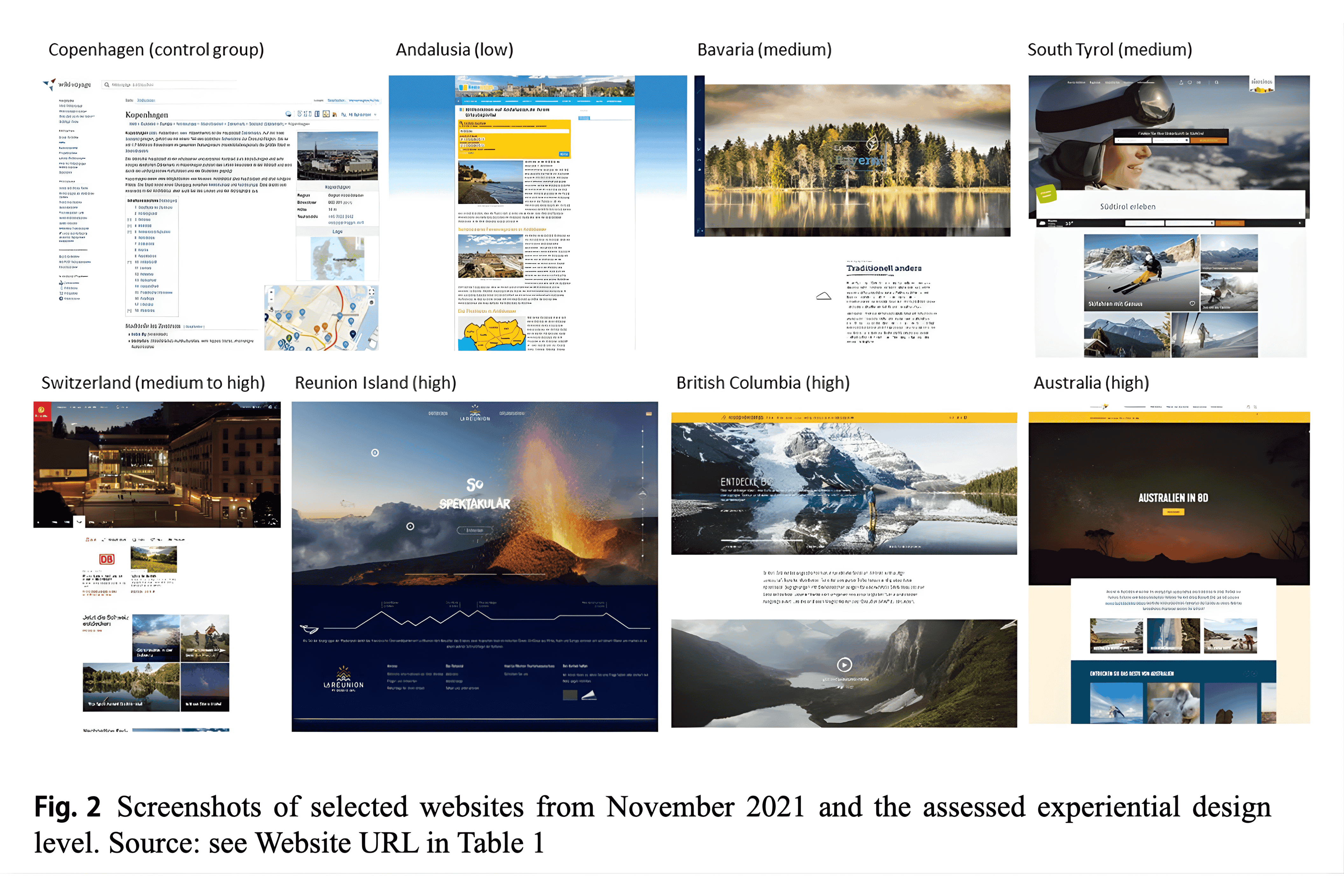
Examples of websites explored by study participants. Image taken from Kochling et al, Information Technology and Tourism, 2022
Consider your limitations
Design for real-world constraints: devices, networks, environments, and accessibility. Gen Z users are frequently mobile-first, multitasking, and quick to abandon slow experiences. Performance becomes a UX decision: lighter screens, responsive interactions, smart caching, and minimizing intrusive popups can do as much for success as visual design. International travelers face a different constraint set: unreliable connectivity, roaming costs, and the need for information in transit.
When developing the personas for a Costa Rican restaurant website I have developed, I imagined a desperate American tourist who is hungry and looking for an authentic place to eat traditional local food. The Photos first, text later approach guided me through developing the “360 café” website.
Consider users’ effort and control expectations
Some audiences want speed and automation; others want transparency and verification. Gen Z may appreciate fast creation flows, defaults that get them started, and playful microinteractions, but they also tend to value control over identity and privacy. Give them clear toggles, simple settings, and honest explanations of what happens when they connect contacts or share content.
Older users, especially when asked to spend significant money, often want reviewable steps: a summary before payment, explicit confirmation screens, and clear receipts. They may accept a slightly longer flow if it increases confidence. The right design is not “shortest path”; it’s “most reassuring path for this audience.”
The “sign up for 3-day free trial” landmine
Prototype and test the risky assumptions, not just the screens. Targeted products often fail because of one or two mismatches: the wrong trust cues, an unclear pricing model, a sign-up wall too early, a payment option missing, a discovery flow that doesn’t match the audience’s behavior. Prototyping helps you isolate those assumptions.
Test with representative users in realistic conditions: on mobile, on slow networks, with real tasks and time pressure. A Gen Z-focused product should be tested for “time to value” and whether users understand how to start without being taught. A tourism product should be tested for comprehension of total cost, policy clarity, and whether users can successfully complete a booking even when they’re uncertain or comparing options.
Conclusion
Designing for a specific target population is ultimately an exercise in respect: respecting how people live, decide, and feel when using your product. The challenge isn’t just visual style or demographic stereotypes; it’s translating audience context into clear priorities across research, content, interaction, trust, and technical performance. When you build with that discipline, you don’t just create a “usable” product. You create a product that feels made for someone, and that’s what turns first-time users into loyal ones. Share with me your experience designing a product for a specific audience, and stay tuned for next week’s blog, all about the secrets of food photography.
Share this post


Digital Strategy
Apr 18, 2026
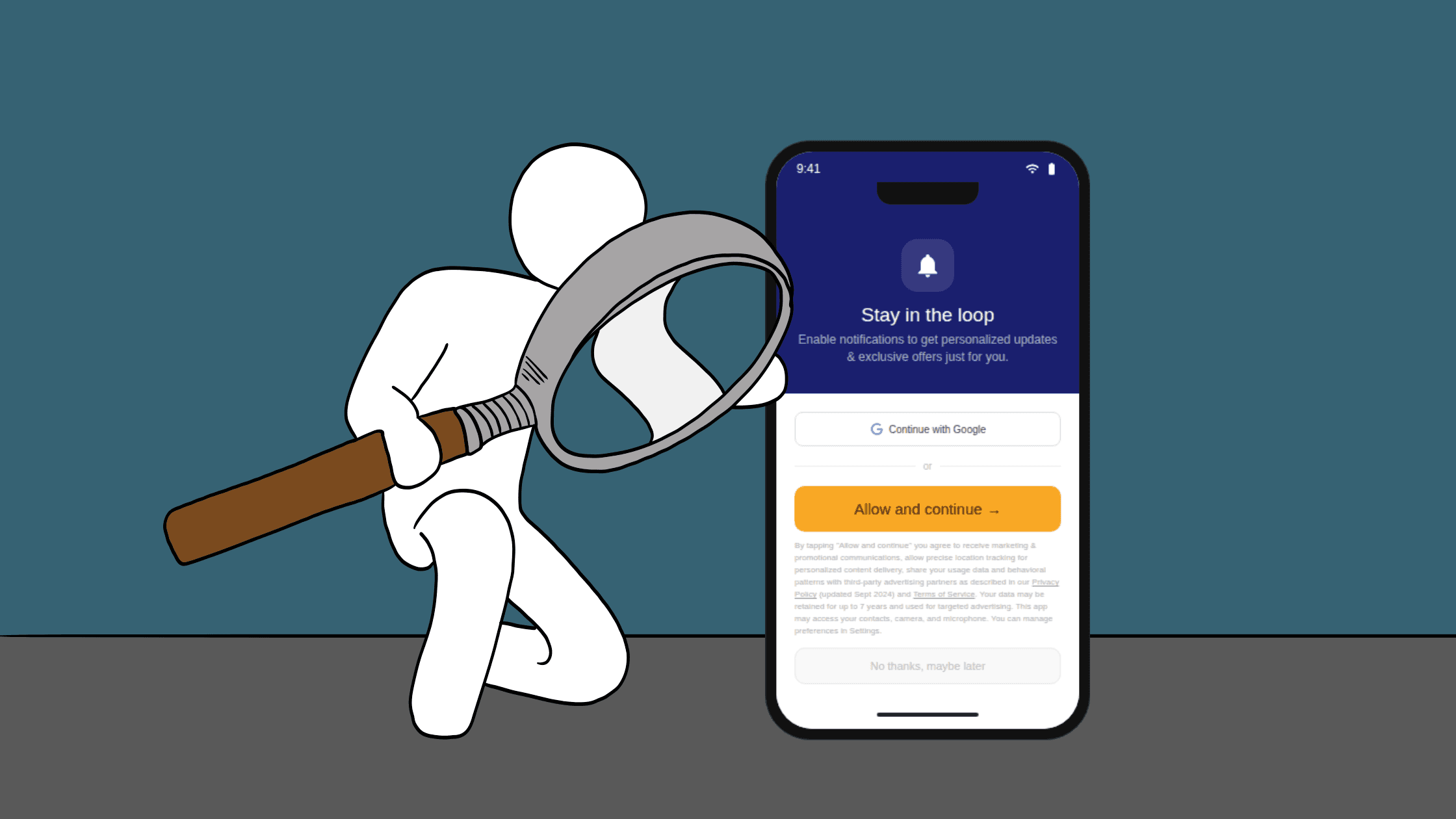
Labels, Warnings, and Other UX Landmines (and How to Design Them Well)
Mandatory information like fine print, disclosures, and warnings appear throughout digital experiences as required by legal teams. The issue isn't their presence but how they're handled. Top products don't just seem compliant; they present this information clearly.

Digital Strategy
Apr 10, 2026
Social Media vs. Your Own Website - Where to invest?
Every small business owner faces the same question: invest in social media or build a dedicated website? The answer depends on what your business needs most. This post breaks down the strengths, limitations, and ideal use cases for each so you can make a smarter, more strategic choice.

Creative Design
Apr 5, 2026
Spicing up the message – Using food in design
Food is one of the most powerful tools in visual communication. In Spicing Up the Message, we explore how food crosses cultural and emotional boundaries to deliver messages that words alone can't.